 Denver DUI Attorney Blog


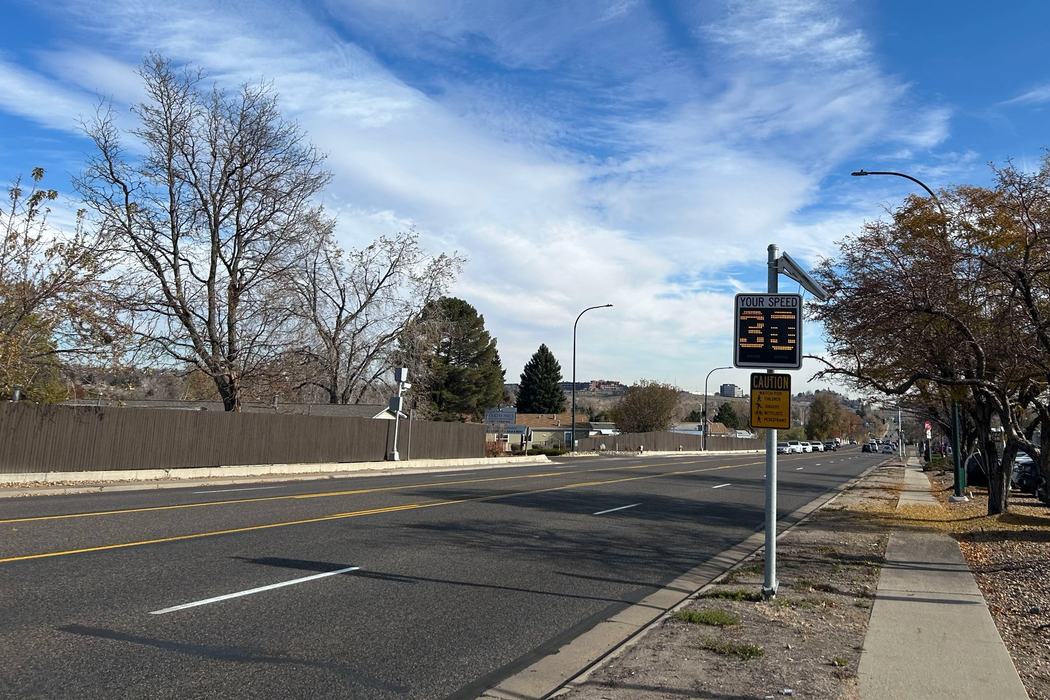
Speed feedback signs like this one are part of Denver’s SPEED program on Federal, Alameda and Colorado Boulevard.
A Denver speeding ticket can be a simple fine you pay by mail, or a court date with points that put your license at risk. The difference usually comes down to one number: how fast you were going over the limit.
I’m Monte Robbins, a Denver traffic and criminal defense attorney with more than 20 years of experience. Here’s how points and court work on Denver speeding tickets, plus what’s changing on Federal, Alameda, and Colorado Boulevard.
How Many Points Is a Speeding Ticket in Colorado?
Colorado’s DMV assigns points based on how far over the limit you were:
| Speed over the limit | Points |
|---|---|
| 1–4 mph | 0 |
| 5–9 mph | 1 |
| 10–19 mph | 4 |
| 20–39 mph | 6 |
| 40+ mph | 12 |
The same chart applies whether the ticket is under state law or a Denver city ordinance. For adults, 12 points in 12 months or 18 points in 24 months can lead to a suspension. Drivers under 21 have lower limits.
Paying on time can lower the points. For a state penalty assessment ticket paid by the due date, Colorado reduces the points: 2 points off a ticket of 3 or more points, 1 point off a 2-point ticket. Cities can choose to offer the same. In Denver, the offer printed on your ticket is the version to read closely; see my post Should I Just Pay My Denver Traffic Ticket?
The Three Kinds of Denver Traffic Tickets
Denver police generally write tickets under Denver’s city traffic code rather than state law, whenever there’s an equivalent city ordinance. Every charge falls into one of three types:
- Infraction. A civil violation. You can’t be arrested for it, there’s no jury trial, and you can handle it by mail. Most speeding tickets are infractions.
- Designated criminal violation. Technically criminal, but you may be able to pay by mail instead of appearing.
- Criminal violation. A court date is required, and you have the full rights of a criminal defendant.
When a Denver Speeding Ticket Means Court
Most Denver speeding tickets, including many at 20 to 24 mph over the limit, are non-criminal traffic infractions written as a penalty assessment. The ticket usually includes a printed plea offer, and no court appearance is required.
If you do go to court on an infraction, know what to expect: there’s typically no prosecutor in the room. Your choices are to take the deal or set the case for trial.
A speeding ticket does mean a required court date when:
- You’re 25 mph or more over the limit. At that point it can be charged as a criminal traffic offense.
- The ticket includes a criminal charge, like reckless driving or driving under restraint.
- There was a crash with injury or significant property damage.
Your ticket tells you which kind you have. If it sets a court date, it’s not a ticket you can just pay.
New in 2026: Extra Points for High Speeds
Since August 12, 2026, Colorado adds points on top of the chart for high-speed tickets:
- 100 mph or more: 4 extra points
- Repeat tickets 20+ over, or over the 75 mph maximum: 2 extra points for a second within 12 months, 4 for a third within 24 months, and 8 for a fifth within 5 years
On I-25 or I-70 through Denver, a single ticket at 100 mph can now add up fast. My DMV point suspension page explains what happens if you go over the limit.
Denver Police Make Speeding a Priority
Denver police policy tells officers to focus traffic enforcement on high-risk violations, and speeding is on that list, alongside DUI, reckless driving, and running red lights. Minor, low-level stops are discouraged, but a speeding stop isn’t one of them.
The SPEED Program: Federal, Alameda, and Colorado Boulevard
Denver’s SPEED program targets three of the city’s most dangerous streets. Here’s what drivers will notice:
- More signs. About one speed limit sign every quarter mile on Federal and Alameda, plus electronic speed feedback signs. Colorado Boulevard is next.
- Signals timed to the speed limit. Drive the limit and you’ll hit more green lights.
- Late-night signal timing. Signals rest in green less at night to discourage speeding. In 2024, 57% of Denver’s fatal crashes happened at night.
- Speed safety cameras. Cameras are being installed along Federal Boulevard and Alameda Avenue in 2026.
Camera tickets work very differently from an officer’s ticket: no points, capped fines. See my post on Denver photo radar and red light camera tickets.
Frequently Asked Questions
How many points is a speeding ticket in Denver? It depends on how far over the limit you were: 0 points for 1–4 mph over, 1 for 5–9, 4 for 10–19, 6 for 20–39, and 12 for 40 or more.
Do I have to go to court for a Denver speeding ticket? Not for most. Many tickets, even 20 to 24 mph over, are infractions with a printed plea offer and no court appearance required. At 25+ over, or with a criminal charge or an injury crash, court is required.
Can paying early reduce my points? Often. On a state penalty assessment paid on time, points drop by 2 (or 1 on a 2-point ticket). In Denver, check the offer on your ticket.
Are there speed cameras on Federal Boulevard? They’re being installed along Federal Boulevard and Alameda Avenue in 2026 as part of Denver’s SPEED program.
Will a speed camera ticket put points on my license? No. Photo speed tickets carry no points and aren’t reported to the DMV.
Facing a Denver Speeding Ticket?
If an officer wrote you a speeding ticket in Denver, especially one with a court date, call me at 303-355-5148 for a free consultation. You’ll talk with me, not an intake team. Learn more on my Denver traffic lawyer page.